.png)
Edible Native Plants: The Nature's Bounty
- Nov 16, 2025
- 3 min read
I am now in North Carolina where we spend the summer to escape that Florida heat!
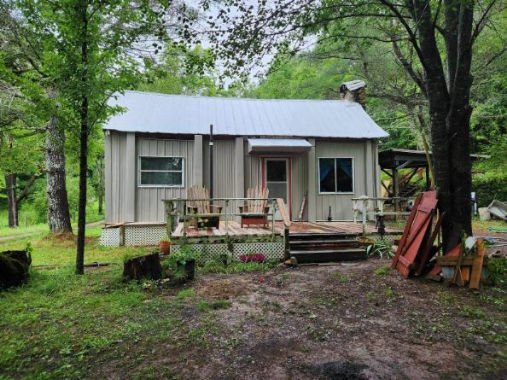
Our little cottage is quite remote. It is nestled along a lane just high enough to be above the valley, but not at the top of the mountain. I love the peacefulness around us.
🚶♀️ Morning Walks and Cool Breezes
The animals seem to be so comfortable that it is not uncommon to see them feeding in the open valley or walking along the lane past our place.

I have to admit my morning walks here in NC are so much more peaceful than my walks in Florida. Maybe it’s the hills and valleys, or maybe the babbling brooks. What a wonderful thing to see and feel! Just the thought of this calms me. ☺️

The temperature here is about 10⁰ cooler than where I’m from in Florida. The low temperature back there is now consistently above 70⁰, where here in NC, our lows are still running in the 60s.
🌱 Learning and Adapting to Different Growing Zones
Those who have been getting my newsletter know this makes a difference to me. So, I’m now trying to adapt to the different diversity between the two places.
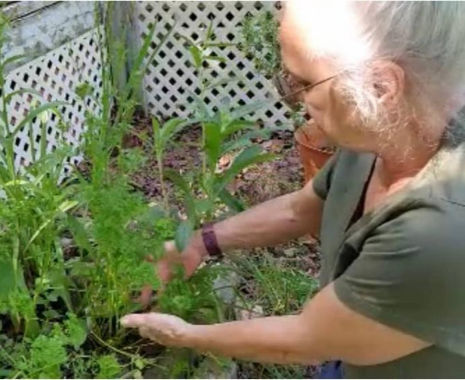
I’m learning which herbs and plants survive temperatures below 20⁰. I haven’t seen my plants here in NC since I left at the end of summer last year and when I came back this year, I found sage, comfrey, parsley, yarrow, chives, echinacea and mint, to name a few that I planted, alive and well!
🌿 Playing with the Parsley
One of my goals is to learn to identify the native and naturalized plants and how they can be used. I’m finding that mullein can survive the heat of Florida and the cold of North Carolina. Even if I don’t use it for its many uses, I love the way it looks in the landscape.
🌼 Discovering Edible Native Plants
I’ve been identifying native plants that are edible like plantain (the herbaceous, flowering ones, not in the family of the banana), which can be eaten or cooked as a green.

The younger leaves are more tender than the older leaves, which can be tough and fibrous.
Violets are everywhere! As of yet I haven’t been here early enough in the season to see the flowers, but the leaves can also be cooked like greens or added fresh to salads.

Then there is this wonderful orange day lily (Hemerocallis fulva).

🌺 The Orange Day Lily
One of my resources for identification is The Audubon Society Field Guide to North American Wildflowers Eastern Region, which indicates that every part of the plant is mild and edible and the buds taste like green beans when cooked. I tried them by putting them in a brothy soup and I can vouch that they do have a taste of green beans!
🌼 Spring Signs and Foraging Ideas
This year we got here early enough to see a few dandelions here and there, so I was able to identify them. We had to go back to Florida for a few weeks and when we got back to NC, the flowers were spent, unfortunately. I saw a great idea using the puffballs to get the seeds for microgreens. Maybe next year!
🏚️ Our Cabin’s History

Since 2022 we have been making improvements to this old cabin that was built sometime in the 1930’s and was used by moonshiners according to our various neighbors.
Our neighbors who live down the lane, brothers in their 80s and 90s, have told us stories of when they lived in a two-room cabin with their family of nine in the early days. In those times they had to go up to the spring to get water, even in the winter. Brrrr! 🥶
🌲 Embracing Life in Nature
So, while we are working on our improvements, we are soaking up the nature all around us. I hope you can take time from your busy day to take a few breaths to feel the life in nature, relax and send happy thoughts to your loved ones and those around you.
Until next time!


Comments