.png)
Plant Propagation Tips: Cuttings, Layering, and Division
- Apr 11
- 4 min read
Today, I would like to answer questions I’ve been asked about propagating plants. There are many ways to do this, namely cutting, simple layering and division. I will explain a little of each in this week’s Herb Talk.
Understanding Plant Nodes for Plant Propagation
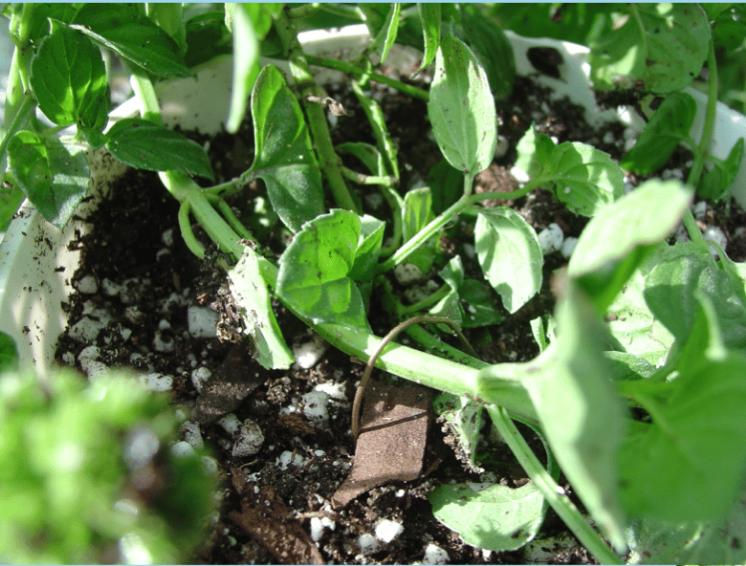
Let’s start by talking about the nodes of a plant. The leaves attach to the main stem and at the point of attachment where new growth comes out is called a node. The node has cells that will produce new growth, or roots, such as what you see in the picture.

Cuttings
When replicating a plant (propagating) through cuttings, these nodes can be very important.
When taking a cutting from the plant, the first thing you will do is remove approximately 4-5 inches off the stem. You also do not want to use soft, new growth, such as a rose might have. In that case, you would want to remove that tender part at the top of the stem. The idea is to have several nodes to produce new growth above the media you are putting the cutting into, and also nodes beneath for roots to produce.

Preparing the Cutting
Next, I remove the larger leaves so that the nutrients will go to the roots and new growth, instead of trying to keep the large leaves healthy. Then I remove any bottom leaves that will be under the media to promote root growth.
Then remove the top growing tip of the cutting (if the cutting is taken from the top of the stem) for the same reason as removing the large leaves - you want the strength to go to the new side shoots and not keep pushing up.

Monitoring Growth
Once they are planted, you should start seeing some new growth before long. When you see the new growth becoming larger, you know the roots are developing. You should hold off on transplanting until you see good root growth.

If you want to see me work through this process, check out my YouTube video on propagating here.
Simple Layering
There are many ways to do this. I will explain my favorite way of simple layering with pinning because this gives me the most success.
Using Pins for Layering
When simple layering in a pot or a plant with smaller stems, I use pins like bobby pins or small garden pins to help secure the stem to the media.
Preparing the Stem
I find it helpful to slightly scrape parts that I will be pinning to the soil. Exposing the cambium helps the roots to grow.

Rooting Aids (Optional)
Sometimes I use a rooting powder, but I have had success without it. I do not have a brand preference. It takes a very small amount of powder each time I use it, so after around a year, the viability of the powder lessens and I end up throwing quite a bit of it away and buy a new one.
Another option is to use willow water, which is used to naturally promote roots. The water consists of leaves and branches of willow soaked in water. They have Indolebutyric acid (IBA) and Salicylic acid (SA) which promotes growth and health when taking cuttings or when simple layering.
To be honest, many times I use nothing, but still have good luck with rooting on cuttings and simple layering, so the root powder or willow water is optional. If you consider yourself to have a brown thumb like Heather and feel like you need all the help you can get, feel free to use it!
Layering Larger Plants
Getting back to the layering method, when I am simple layering a planted shrub or plant, I normally use ground pins for the larger stems, which are usually used for pinning ground cover, as opposed to the smaller bobby pins size.
For large plants, I usually use pots filled with media intended for new plant growth next to the mother plant. I use larger pots as opposed to 4” pots like I do with herbs, such as a half gallon to one-gallon, and put them next to the mother plant I am simple layering. I have done this with azaleas, grapes, etc. I also use larger pins than the ones I use with smaller plants.

Final Step in Layering
For all plants no matter the size: take the stem of the mother plant down to the media and pin it down to hold it in place. Once you verify good rooting has happened you can cut the stem from the mother plant. This process usually goes pretty fast, even in a couple of weeks it may be ready to cut.
Division
When your plants become too large for its pot, you can replicate by division. The example I am showing is lemongrass, but I have used this option for many herbs, like mint, thyme, etc.

Dividing the Plant
As you can see from this picture, this plant has been in the pot too long, but I took advantage of this to get several new plants. When you see the really dense roots at the bottom, cut them off. With all the other healthy roots, it will not hurt the plant.
I removed more roots after I divided it into smaller bunches. Lemongrass handles this really well, but I’ve also done this with other plants, like chocolate mint. See how I divided my chocolate mint, along with the other techniques I mentioned here, in my newly published propagating YouTube video!
If you have any questions, please feel free to contact me!
Happy Gardening!


Comments